
If Iran and Oman choose to charge a fee for rendering services to vessels using their territorial waters, so be it. The US is indulging in an irrationally self-destructive act, notes Ambassador M K Bhadrakumar.

China displayed a range of new weapons at a military parade, including laser weapons, nuclear ballistic missiles, giant underwater drones, and fifth-generation aircraft.

Russia has shared intelligence with Iran that could help Tehran target American warships, aircraft and other military assets in the region, according to United States intelligence assessments cited by media reports, marking the first indication of Moscow's possible involvement in the ongoing conflict. Officials familiar with US intelligence findings said a significant portion of the shared information reportedly includes imagery from Russia's network of surveillance satellites.

Iran's Islamic Revolutionary Guard Corps (IRGC) claims control of the Strait of Hormuz and reports striking a US destroyer, escalating tensions in the Middle East following retaliatory strikes between Iran, the US, and Israel.

Indian billionaire Gautam Adani-led group's Haifa port in Israel was unharmed by the Iranian ballistic missile attack, with cargo operations progressing unhampered, sources said. Late on Saturday night, Iran targeted Israel's Haifa port and a nearby oil refinery in response to Tel Avi's attack on Iranian nuclear and other targets earlier this week.
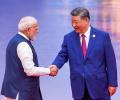
For India, China's Indian Ocean power projection, maritime domain awareness, dual-use ports, underwater surveillance, antisubmarinewarfare, naval exercises with Pakistan, pose considerable pressure, depleted India's strategic depth and marginalises Indian role, points out Srikanth Kondapalli.

Iranian President Masoud Pezeshkian maintained a stance of defensive necessity, noting that Tehran is "forced to retaliate to attacks" but clarified that this does not imply a dispute with neighbouring countries

White House Press Secretary Karoline Leavitt on Tuesday said that the United States has not ruled out the option of sending troops on the ground in Iran and that military operations in the Persian Gulf nation would end once the objectives of Operation Epic Fury are achieved.

India successfully test-fired two Pralay missiles in quick succession off the coast of Odisha, paving the way for its induction into the military. The missile is indigenously developed and features a state-of-the-art navigation system.

'American stature has been reduced because they have not been able to achieve their aims.'

US President Donald Trump is set to provide an "operational update" on the progress of 'Operation Epic Fury' during a national address scheduled for 9 PM Wednesday (US local time).

'Iran cannot trust the USA because it considers the USA to be Israel-controlled. And no, the IRGC is not going to accept anything else but major US concessions.'

The targeted eastern area is of immense strategic importance, as it is where the "majority of the country's oil resources are located."
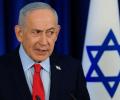
Benjamin Netanyahu declares that the joint Israel-US campaign is successfully 'crushing' Iran, eliminating existential threats and weakening the regime's regional influence.
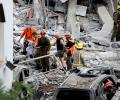
Glimpses of the damage from Iranian missile attacks on Rishon LeZion, Ramat Gan and Tel Aviv in Israel, June 13 and June 14, 2025.
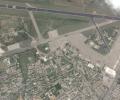
The Pakistani government has once again found itself embarrassed on the world stage, now acknowledging the impact of India's strategic and precision strikes on its military installation during the escalation in May, following Operation Sindoor, which came in retaliation for the April 22 Pahalgam terror attack that killed 26 civilians.

Trump said that Iran's leadership, along with its air defence, Air Force, and Navy are 'gone'.

Secretary of State Marco Rubio urged its citizens to immediately depart from several Middle Eastern countries, citing "serious safety risks."
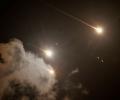
Chief of the General Staff of the Iranian Armed Forces, Mohammad Bagheri, told Press TV that the Nevatim air base, the Netzarim military facility and the Tel Nof intelligence unit, were hit in the Tuesday night attack dubbed 'Operation True Promise II'.
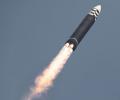
This is the first time in decades that China has made its flight test of an intercontinental ballistic missile public in an apparent show of strategic deterrence, State-run China Daily reported.

President Vladimir Putin announced that Russia has successfully tested the Poseidon, a nuclear-powered submersible drone with unlimited range, along with updates on the Sarmat missile and Burevestnik cruise missile.

Israel initiated military action against Iran shortly after Prime Minister Narendra Modi's visit, capitalising on a fleeting opportunity and years of strategic preparation, according to Israel's ambassador to India.

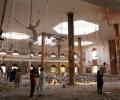
The assault occurred as residents were attending Sunday church services.

'No civilian deserves to live in fear. No civilian deserves to be caught up in a war which is destabilising the entire region.'
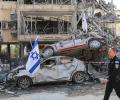
Iran fired around 200 ballistic missiles and drones at Israel on Saturday, June 14, 2025, causing widespread damage in communities in north Israel, killing three people and injuring dozens.

Scenes from war-torn Iran and Israel.

The defence ministry said the test-flight was carried out on Wednesday evening and it met all the trial objectives, validating the reliable performance, as confirmed from the data captured by a number of range sensors deployed at different locations.

The threat of wars hovers over the negotiations in Oman, but the good part is that Trump called the talks to be 'very good' and Iran's President Masoud Pezeshkian responded that they 'constitute a step forward', points out Ambassador M K Bhadrakumar.

Israel wishes to continue its bombing campaign until Iran's military and industrial infrastructure are degraded to a point where it ceases to pose a threat to Israel. Iran, for its part, has learnt from its experience in the 12-day war of last June. Any ceasefire, it believes, will only be a prelude to another attack on itself. It is determined to convey that any attack on Iran will impose heavy costs on Israel, the US, America's allies in the Gulf -- and on the world at large, points out T T Ram Mohan.
Following a joint attack by the US and Israel on Iran, India is calling for restraint and de-escalation to avoid further military confrontation in the Middle East.
In 2025, India launched Operation Sindoor, a multi-domain combat mission against Pakistan in response to cross-border terrorism. The operation involved precision strikes, military retaliation, and diplomatic measures, marking a significant shift in India's security policy.

Trump claims the United States is performing exceptionally well in its ongoing conflict with Iran, citing weakened Iranian military capabilities and a strong US position.

The delegations from the US and Iran head to Islamabad on Friday, carrying a ceasefire that is already fraying, a Strait that is technically open and practically closed, and a negotiating agenda that would challenge even parties actually negotiating in good faith, which these groups are not. Prem Panicker continues his must read blog on the Iran War.

Russian President Vladimir Putin supervised strategic nuclear forces drills amid uncertainty surrounding a potential summit with US President Donald Trump to address the Ukraine conflict.

On Tuesday, October 1, 2024, Iran launched 102 missiles against Israel, almost all of which were intercepted by the Zionist State's Iron Dome system.

If India's nuclear and missile capability before Agni-5 was not enough to deter China, then it is unlikely that Agni-5 will, argues Sushant Sareen

'Strikes into the Gulf countries are proof that the security guarantees offered by the US are ineffective and that the Gulf countries cannot rely on American security assurances for their safety.'

Taking Kharg would give the US control over virtually all of Iran's oil exports and thus provide significant leverage, notes Prem Panicker in his must read daily blog on the Gulf War. It would also put American troops within range of Iran's remaining missiles, drones, and artillery on a piece of real estate that is just eight square miles in size, and just 15 miles from the Iranian mainland.

Prime Minister Narendra Modi on Monday congratulated Defence Research and Development Organisation (DRDO) scientists over the first flight test of indigenously developed Agni-5 missile, capable of deploying multiple warheads.

'We were in a heavily nuclearised environment. China had tested for Pakistan in the 1980s and helped their missile programme stay just one step behind us.'
